The Ultimate Guide to Planning a Drive-in Fireworks Display in the UK

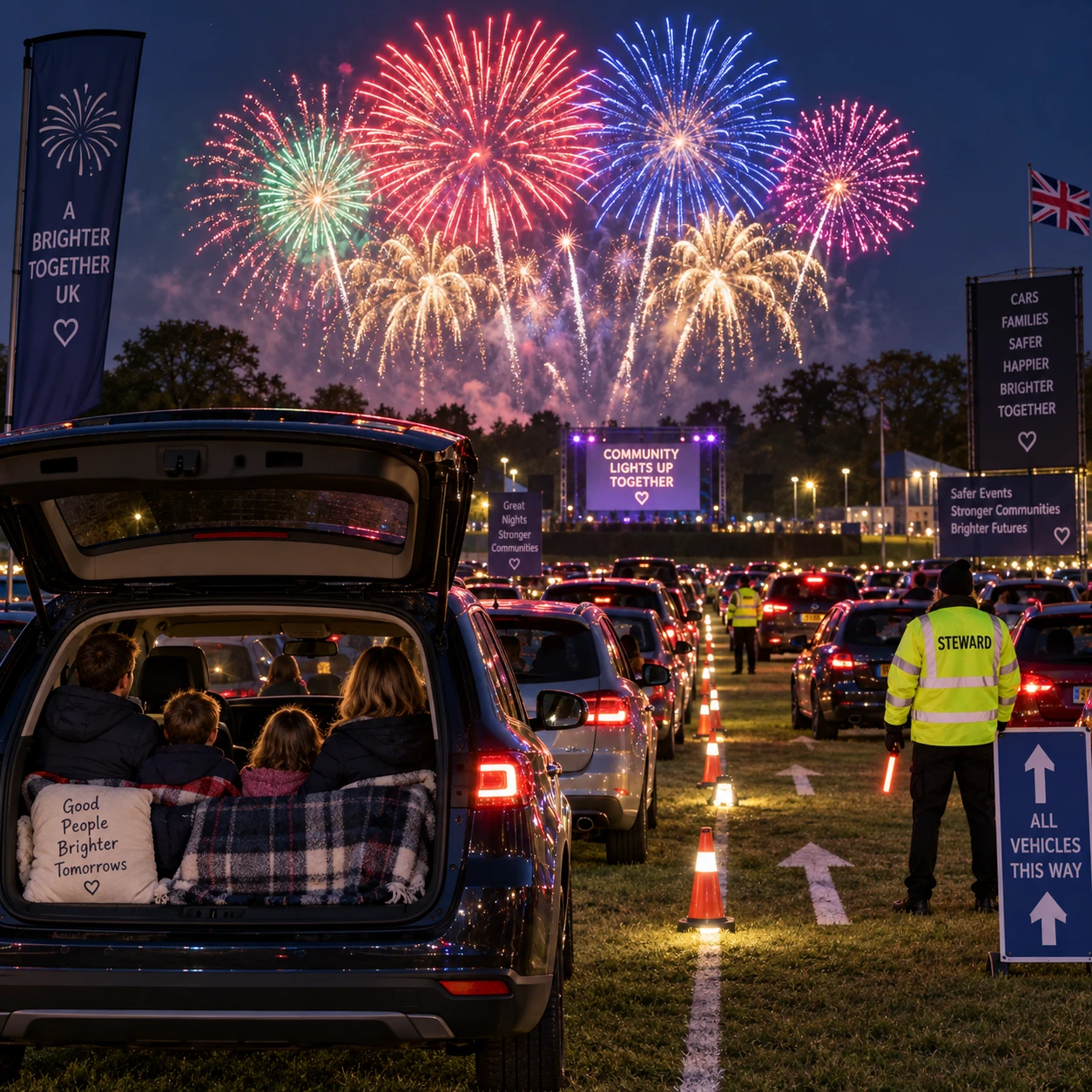
A drive-in fireworks display needs more than a good show and a large car park. Organisers must coordinate the fireworks operator, site layout, vehicle movement, guest facilities and emergency arrangements as one joined-up event plan.
Start with the experience you want to offer, then test whether the venue and team can deliver it safely. The right sequence saves time: define the event, assess the site, appoint competent specialists, and build the guest journey around the resulting safety plan.
Start with the event concept and audience
Define the audience, scale, date and format before choosing a venue or selling tickets. A clear concept gives your suppliers and team a shared brief and helps you estimate capacity, staffing and facilities.
Decide whether the event is aimed at families, local residents, community groups or a wider audience. Then settle the essentials: expected attendance, vehicle limit, show duration, ticket format, gates-open time and any supporting activities. A family-focused evening may need an earlier start and quieter arrival experience; a larger public event may require more traffic management and guest services.
Check possible dates against local events, school holidays and seasonal daylight. Avoid promising a fixed show time until the fireworks operator has assessed the site and you understand the programme. Set out what each ticket includes, such as admission for a vehicle and a defined number of passengers, and explain any vehicle-size restrictions.
Plan for cars, not just people. One vehicle can carry several guests, so headcount alone does not determine parking capacity. Estimate both cars and passengers, then include space for accessible parking, staff, suppliers and emergency access.
Choose a suitable venue and plan the layout
A suitable UK venue has enough space for parking, viewing, the firework safety zone, traffic circulation and emergency access, subject to a site-specific assessment. A large field or car park is not automatically suitable.
Walk the site with the fireworks operator and the people responsible for safety and traffic. Review ground conditions, slope, drainage, entrances, exits, nearby buildings, overhead lines, trees and other hazards. The operator should assess whether the proposed firing position and safety distances are appropriate for the specific fireworks, site and audience. Do not set distances from a generic template.
Draw a scaled site plan showing the firing area, audience and vehicle viewing areas, parking bays, pedestrian routes, toilets, first aid, food vendors, steward positions and emergency access. Keep routes for emergency vehicles clear and usable throughout the event. Plan vehicle circulation so arriving cars do not cross pedestrian paths or block the exit route.
Test viewing sightlines from typical parked vehicles, including accessible spaces. Avoid layouts where taller vehicles block views or where guests may be tempted to leave their cars and move into restricted areas. Mark one-way routes and turning points clearly, and confirm that the ground can support vehicles in wet conditions. If the site cannot preserve the operator’s required safety arrangements and emergency routes, reduce capacity or choose another venue.
Arrange fireworks, permissions, and safety planning
Appoint a competent fireworks operator early, and make the display plan, risk assessment and local checks part of the same process. The operator should lead the technical planning for the fireworks; the event organiser remains responsible for coordinating the wider event.
Ask potential operators about relevant experience, insurance, responsibilities, equipment, firing arrangements and what they need from the venue. Agree who controls access to the firing area, who can authorise a pause, and how the operator communicates with the event control team. Put the agreed roles and show timings in writing.
Prepare a site-specific risk assessment with the operator and other relevant advisers. It should consider the firework safety zone, audience and vehicle positions, fire risks, weather, noise, access control, traffic, medical incidents and evacuation or shelter arrangements. The right controls depend on the venue and show; a document copied from another event cannot confirm that your setup is safe.
Check local requirements with the relevant council, landowner and other appropriate authorities. Depending on the location and event, you may need to discuss permissions, licensing, noise, road use, fire precautions or environmental considerations. Requirements vary, so seek advice early rather than assuming that one approval covers every aspect. For general public safety guidance, consult the Health and Safety Executive and confirm event-specific decisions with qualified professionals.
Design the guest journey
Design the guest journey from booking to departure so visitors know when to arrive, where to go and what to expect. Clear ticketing and traffic instructions reduce queues and prevent confusion around the site.
Use arrival slots to spread vehicles over a realistic period. State the entrance location, latest arrival time, vehicle restrictions, passenger limits and what to do if someone arrives late. Send a map and practical information before the event, then repeat key instructions at the entrance and through stewards or announcements.
Plan vehicle parking and traffic flow together. Use a one-way system where the site allows it, separate entry and exit routes when practical, and assign stewards to decision points rather than placing them where they cannot safely communicate. Keep access lanes clear and have a procedure for a stalled vehicle, a wrong turn or an arrival after the show has begun.
Account for accessibility throughout the visit, including accessible parking, step-free routes to facilities and a way for guests to request assistance. Provide suitable toilets, including accessible provision, and set out arrangements for food and drink, waste and lost property. Tell guests whether they can leave their cars during the display, and make the rules clear before ticket purchase. Every extra facility adds value, but it also needs space, staffing and safe access.
Build your event team and operating plan
Assign a named lead to every key function: fireworks, site operations, traffic, stewarding, security, first aid, communications and guest services. A written operating plan helps those leads coordinate without confusion on the night.
Prepare a contact list and simple event schedule with arrival, briefing, gate opening, final checks, show start, close and departure phases. Identify who can make decisions if the display is delayed or must be stopped. The fireworks operator must retain control of technical firing decisions, while the event lead coordinates guest communication and wider site response.
Brief stewards on their posts, radio channels, access restrictions, escalation process and what to do if a guest leaves a vehicle or enters a restricted area. Provide high-visibility clothing and ensure team members can be identified by guests. Arrange suitable first-aid provision for the expected attendance and confirm how emergency services will reach the site. Security arrangements should support access control and calm crowd management, not impede emergency response.
Use one communications plan for the event team. Check radios or phones across the site before gates open, agree plain-language messages and identify a backup if the main system fails. A short briefing is useful; a clear chain of command is essential.
Prepare for weather and other contingencies
A weather contingency plan should state who monitors conditions, who decides whether to delay or cancel, and how guests and staff will be informed. It should also cover vehicle problems, medical incidents, traffic disruption and communication failures.
Agree decision points in advance with the fireworks operator and venue. Weather effects depend on the fireworks, site and conditions, so do not improvise technical limits on the night. Consider rain, wind, poor visibility, waterlogged ground and any forecast that could affect safe operation or vehicle access. Identify a latest decision time that allows you to notify guests before they set out where possible.
Write practical responses for common problems:
- Poor ground conditions: inspect the site before opening and decide whether access, parking or emergency routes remain usable.
- Vehicle breakdown: keep a recovery or assistance procedure and a safe way to move a vehicle without blocking essential lanes.
- Delay or pause: nominate who announces the change and how information reaches people in parked cars.
- Cancellation: agree the decision process, ticket terms and customer communication before sales begin.
Do not promise that a display will proceed in all conditions. A weather contingency may mean a delay, a reduced programme or cancellation; explain this honestly in booking information and keep the safety decision separate from commercial pressure.
Run the event and review it afterwards
On event day, complete a final site check, brief the team, control access to restricted areas and make clear announcements before the display and departure. Record incidents and review the operation while details are fresh.
Before opening, confirm that the parking layout, signage, toilets, first aid, radios and emergency routes match the plan. The fireworks operator should complete their own technical checks and confirm when the site is ready. Do not admit vehicles to areas that have not been approved for audience use, and keep the firework safety zone under the agreed control arrangements.
Tell guests where to remain, how to report an issue and what to expect after the show. At the end, release vehicles in a controlled way if the site layout requires it, with stewards preventing pedestrians from moving into live traffic routes. Avoid sending everyone toward a single exit without checking whether it can handle the flow safely.
Log incidents, near misses, delays and guest feedback. After the event, compare actual arrival and departure patterns with your plan, check whether facilities and staffing were adequate, and review any changes made on the night with the relevant leads. Those findings give you a practical basis for improving the next drive-in fireworks display.