How to Choose the Perfect Venue for a Drive-in Fireworks Show

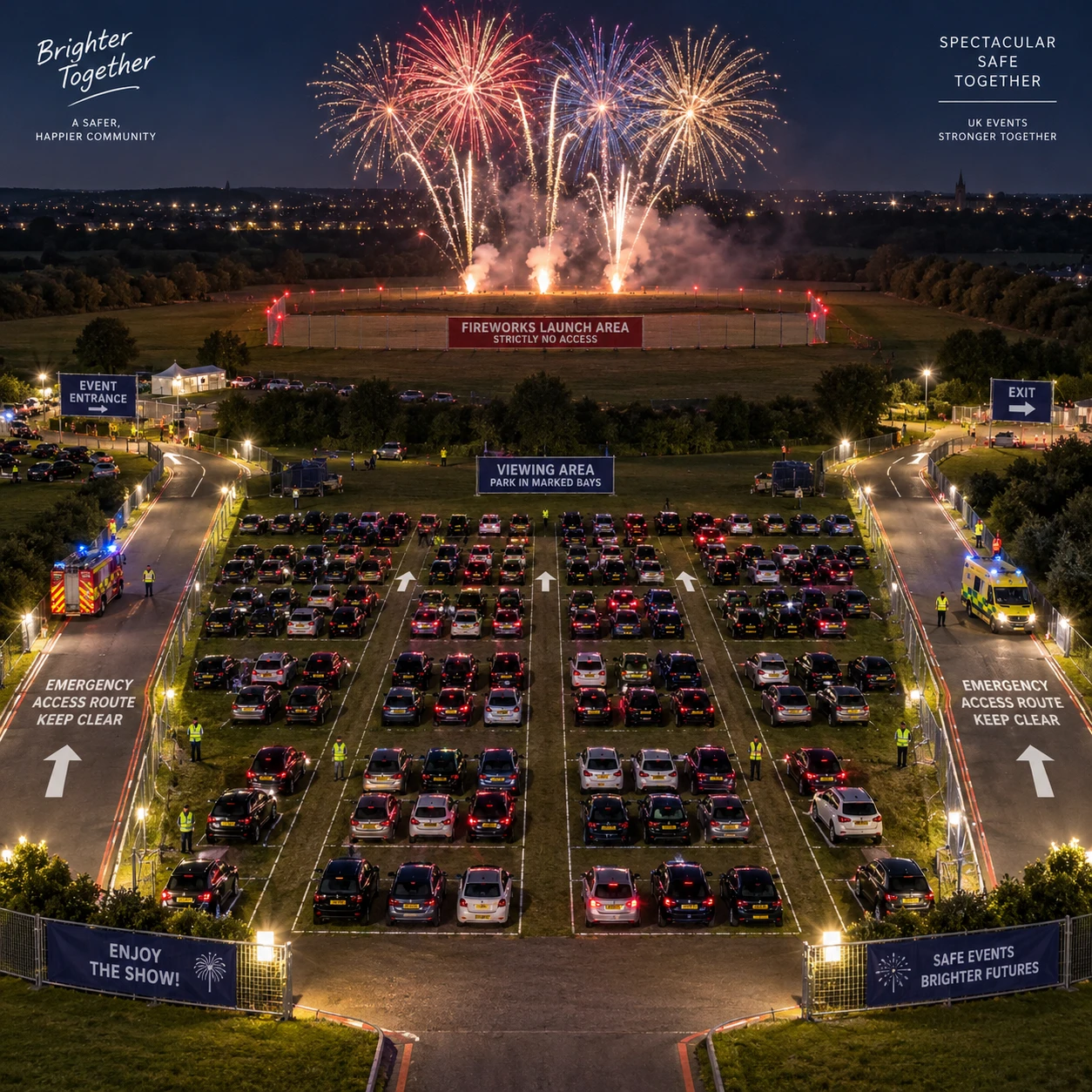
The right venue for a drive-in fireworks show needs to do more than look impressive. It must accommodate vehicles, provide clear views, support safe fireworks operations and allow people to arrive and leave without blocking emergency access.
Start by assessing the site as an event operation, not simply as a field or car park. Capacity, vehicle flow, permissions, facilities and ground conditions all affect whether the event will work. Confirm the details with the venue, your local authority and qualified fireworks professionals before committing.
Start with the event format and audience
Choose a venue only after you have defined the expected audience, vehicle numbers and type of experience. Those decisions determine how much usable space you need and what facilities the site must provide.
Estimate attendance in vehicles as well as people. A family of five arriving in one car uses the site differently from five separate households, and accessible parking or staff vehicles also need space. Decide whether tickets will be sold per car, per person or by vehicle size, then build your capacity estimate around the actual parking plan.
Set out the event’s basic operating assumptions:
- Expected vehicles, passengers, staff and contractors.
- Arrival window, show duration and planned departure period.
- Whether cars stay parked throughout or attendees can use designated facilities on foot.
- The kind of experience you intend to offer, such as a family-focused show with food outlets or a shorter, simple display.
A venue’s headline capacity may include areas that cannot be used for parking, viewing or fireworks operations. Ask for a site plan and work from usable event space, not the total acreage. A larger audience can increase ticket revenue, but it also adds traffic, staffing and safety demands. Keep the first estimate realistic, then have the layout reviewed before setting ticket numbers.
Check space, sightlines, and site layout
A suitable site provides enough room for parking, clear views and a fireworks exclusion zone, with a safety buffer between the display area and the audience. The required distances depend on the display, products, site conditions and professional safety assessment, so there is no single figure that applies everywhere.
Ask the fireworks operator to assess the proposed firing area and advise how the firework exclusion zone should fit the site. Mark that area on the venue plan, along with vehicle parking, pedestrian routes, entrances, exits and emergency lanes. Do not count space inside restricted zones toward customer capacity.
Then check what customers will actually see. Sloping ground, trees, buildings, lighting columns and parked vans can obstruct sightlines. If cars will be arranged in rows, walk or drive through a full-size mock layout to test viewing angles from different vehicle positions. Keep routes wide and legible enough for drivers to follow staff directions without cutting across the exclusion zone.
Think about the layout as connected zones: arrival and ticket checks, parking and viewing, toilets and concessions, fireworks operations, and emergency access. A tight layout may fit more cars on paper, but it can create blocked views and slow movement. Agree the final capacity only after the complete arrangement has been checked.
Prioritise safety and emergency access
Safety depends on a site-specific risk assessment, suitable evacuation routes and reliable emergency vehicle access. A venue’s apparent size or previous use does not replace professional advice for the proposed fireworks display.
Work with a qualified fireworks professional to assess the launch area, audience separation, surrounding buildings, overhead obstructions and nearby hazards. The site risk assessment should also consider vehicle movement, pedestrians, fire risks, weather, crowd management and what staff will do if the show is delayed or stopped.
Plan for emergency services to reach the relevant parts of the site and leave again without relying on customer parking routes. Keep access lanes clear, identify suitable assembly or evacuation arrangements, and make sure stewards know who gives instructions. If a route could be blocked by parked cars, queues or a closed gate, it is not a dependable emergency route.
Check how the show will stop or change if conditions become unsafe. The fireworks operator and event team should agree how they will communicate a pause, cancellation or evacuation to staff and attendees. Safety buffers and access routes must remain intact throughout the event, including during setup and pack-down. A compact venue can be easier to steward, but only if it still supports the assessed separation and access needs.
Confirm permissions and venue responsibilities
Confirm permissions, restrictions and responsibilities with the venue and relevant local authority before advertising or selling tickets. The requirements can depend on the location, event format, fireworks, dates and activities included.
Ask the venue what it permits under the hire agreement and what approvals or notifications it expects the organiser to obtain. Check with the local authority about applicable requirements, including any relevant event, land-use, noise or firework restrictions. Do not assume that a venue’s past events or existing licences cover your particular show.
Put responsibilities in writing. Confirm who is responsible for the site risk assessment, fireworks contractor, event insurance, stewarding, traffic management, first aid, waste and restoring the land after the event. Check that the insurance arrangements match the event activities and that the fireworks contractor’s documentation and responsibilities are clear.
Make these checks early: if a condition or restriction rules out the planned date, audience size or display format, discovering it late can mean lost deposits and rushed changes. For official guidance on fireworks and safety, consult the UK government’s fireworks law guidance, then verify what applies to your event with the relevant local authority and professionals.
Assess access, facilities, and accessibility
A workable venue has safe approach roads, a manageable entry and exit plan, accessible parking and enough customer facilities for the expected audience. Check both the site and the roads leading to it.
Map the arrival journey from the nearest main road. Look for narrow lanes, sharp turns, low bridges, poor visibility and places where ticket queues could spill onto public roads. Plan separate or clearly managed arrival and departure flows where possible, and consider timed entry or advance ticket checks to reduce bottlenecks. Traffic arrangements should suit local road conditions, not just the number of parking spaces.
On site, provide clear signage and staff at decision points. Confirm how vehicles will be directed into rows and how they can leave safely after the display, when many drivers may depart at once. Emergency vehicle access must not depend on moving a queue or asking customers to reverse out of a blocked lane.
Check toilets, handwashing, lighting, rubbish collection and any food or drink facilities. Ask how the venue supports attendees with mobility needs: accessible parking should be close to suitable toilets and usable viewing areas, with a clear route between them. Consider families with young children and anyone who may need to leave early. More facilities improve comfort, but they require extra space, servicing and staffing, so include them in the site plan from the start.
Check ground conditions and contingency options
Ground conditions and weather readiness determine whether cars can park, move and leave safely. Inspect the site in the conditions you are likely to face, and agree a practical alternative if the weather makes the plan unsafe.
Walk the parking and access areas, checking for soft ground, steep slopes, ruts, drainage channels and low spots that could collect water. A field may look firm in dry weather but become difficult for ordinary cars after prolonged rain. Ask the landowner about drainage, previous flooding and any restrictions on vehicle use. If the site needs temporary tracks or ground protection, include installation and removal in your budget and schedule.
Review wind exposure, likely rain and visibility with the fireworks operator. Weather can affect whether a display proceeds, so agree who monitors conditions, who makes the decision and how customers will hear about changes. Set out refund, postponement or cancellation terms before ticket sales. Avoid promising a backup location unless it has been assessed and the permissions and staffing can be arranged.
A more sheltered or hard-surfaced venue may reduce some weather and access risks, though it can cost more or have tighter capacity. The right choice is the site whose limitations you can manage safely, not the one that looks best on a sunny inspection.
Use a venue visit checklist before committing
Before signing, visit the venue with a site plan and confirm that the proposed layout, access and responsibilities work in practice. Record answers and get key commitments in writing.
Use this checklist during the visit:
- Capacity: What is the realistic vehicle limit after excluding the fireworks area, safety buffer, access lanes and facilities?
- Layout: Can cars park and see the display clearly without obstructing one another or crossing restricted areas?
- Safety: Can a fireworks professional assess the firing position, exclusion zone, evacuation plan and hazards?
- Emergency access: Can emergency vehicles reach the site and move through it while the event is operating?
- Permissions: Which local authority checks, venue approvals, insurance documents and event responsibilities still need confirmation?
- Arrival and departure: Can queues be contained off public roads, and can traffic leave without blocking emergency routes?
- Facilities and access: Are toilets, accessible parking, usable routes, lighting and waste arrangements sufficient?
- Ground and weather: What happens after heavy rain, strong winds or other conditions that make the site unsuitable?
Ask the owner for a current site plan, written hire terms, access times, utility details and any known restrictions. Then share the information with the event team and fireworks professional before you set final capacity or publish ticket details. A good venue is one that works on paper and on the ground, with enough room to deliver the show safely and get every vehicle home.