Essential Safety Regulations for Organising a Drive-In Fireworks Event in the UK

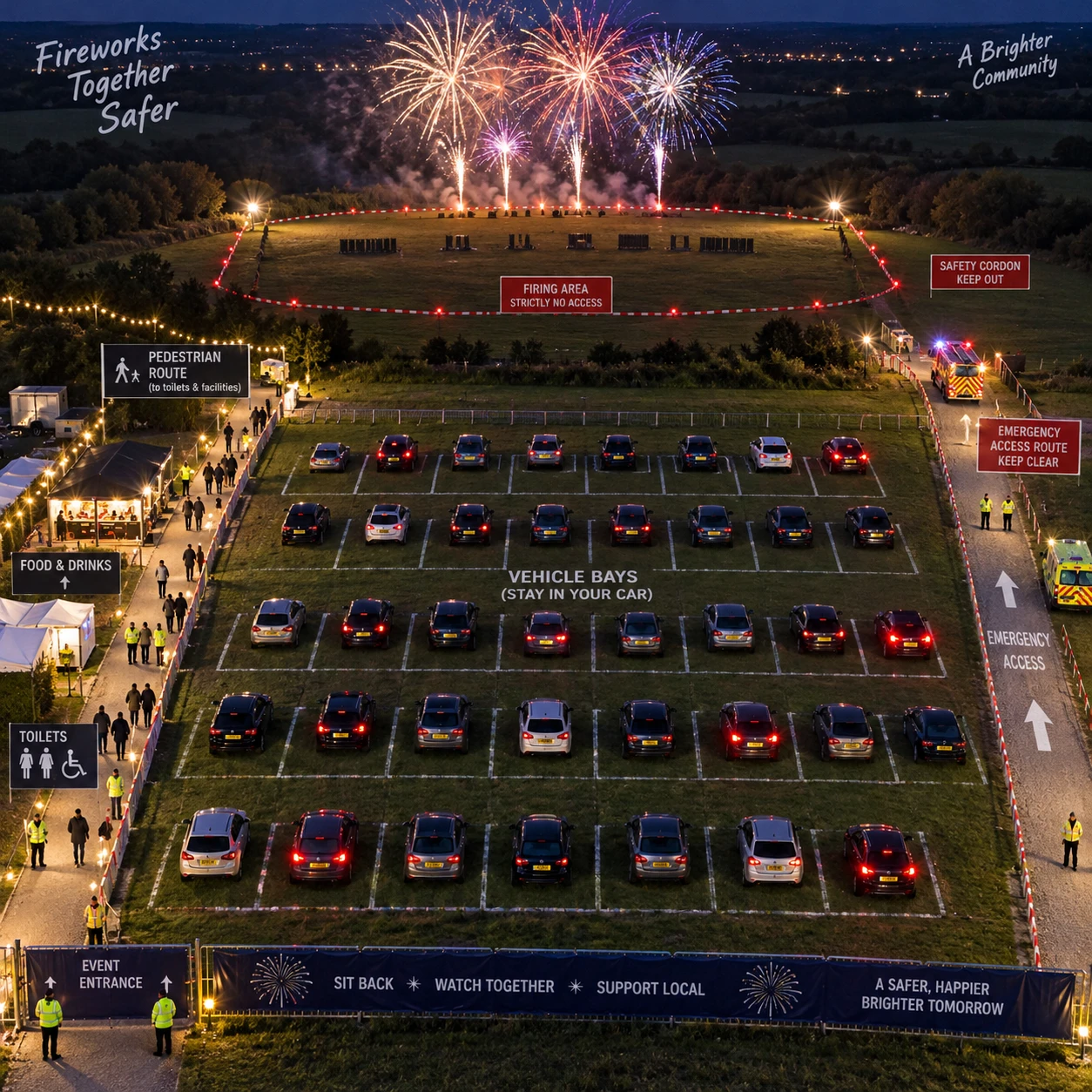
A drive-in fireworks event combines a public gathering, moving vehicles and a live pyrotechnic display. That mix calls for careful, site-specific planning: organisers need to understand their duties, involve a competent fireworks operator, check local requirements and make sure every attendee knows what to do.
There is no single checklist or fixed set of distances that suits every venue. The right arrangements depend on the fireworks, site, audience, weather and vehicle layout. Use this guide as a planning framework, then confirm the details with the relevant local authority and qualified professionals.
Start with a risk assessment and clear responsibilities
A risk assessment identifies hazards, who could be harmed and what controls are needed for this event. The organiser should coordinate it with the venue and fireworks operator, and make sure one named person has authority to act on safety concerns.
Consider the whole event, not only the display. Risks can arise during setup, vehicle arrivals, the firing sequence, departure and site clearance. Assess, at minimum, fireworks and fallout, fire, smoke, noise, crowd movement, vehicle collisions, slips and trips, accessibility, weather and disruption to nearby roads or residents.
Put responsibilities in writing. The event organiser typically coordinates planning and communications; the venue provides information about the land, facilities and site limits; and the fireworks operator controls the display area and firing operations within their agreed remit. Name a safety lead, traffic lead, first-aid contact and decision-maker for pausing or stopping the event. Duties can overlap, so confirm who does what rather than relying on assumptions.
Record hazards, control measures, responsible people and review dates. Revisit the assessment if the site plan, forecast, attendance, fireworks programme or access arrangements change. A document is useful only when staff understand it and the controls are actually in place.
Check permissions and work with the right authorities
Check permissions and event requirements with the relevant local authority early, because approvals and notifications depend on the location and event details. Do not assume that permission to use a field or car park covers a public fireworks event.
Ask the local authority which departments should be consulted and whether the proposal triggers requirements relating to land use, licensing, noise, traffic management, road closures, environmental health or public safety. The exact process can vary by council and site. Contact the fire and rescue service for advice where appropriate, especially if access, firefighting provision or the nature of the venue raises specific concerns. Police, highways teams and other agencies may also need to be involved depending on the event’s scale and impact.
Agree how the fireworks operator’s plans, site layout and risk assessment fit with the organiser’s wider event arrangements. Check whether the venue has conditions or restrictions, and keep a record of advice, applications and decisions. Build enough time into the schedule for questions and revisions; a late change to the site or display can affect the assessment and permissions.
Confirm insurance arrangements, including suitable public liability insurance for the organiser and relevant contractors. Check policy scope, exclusions and required limits with the insurer or broker. This is a planning check, not a substitute for following legal duties or competent safety advice.
Choose and map a suitable site
A suitable site has enough room for the firing area, the required safety distances, audience viewing, vehicle circulation and emergency access. The fireworks operator should determine the display safety requirements for the specific fireworks and conditions; never copy a distance from another event and assume it applies.
Prepare a scaled site plan showing the firing position, exclusion area, audience viewing zones, parking bays, entry and exit points, pedestrian routes, barriers, first-aid point, toilets, assembly areas and emergency vehicle routes. Include boundaries, buildings, trees, overhead obstructions, water, slopes and nearby public roads. The operator should review the proposed layout before it is finalised.
Keep the audience and vehicles outside the operator’s designated safety area. Check where debris could land and whether wind direction or nearby features could affect the safe viewing arrangement. If the site cannot accommodate the necessary separation and clear routes, choose another site or change the event plan rather than squeezing the audience closer.
Plan emergency access that remains usable throughout the event. Mark routes on staff copies of the plan, prevent parking or queues from blocking them, and make sure gates can be opened promptly. Walk the site in daylight before event day, then check that the setup matches the approved layout.
Plan fireworks operations and crowd control
Use a competent fireworks operator to plan and manage the display, and keep the firing area under controlled access. Barriers, trained stewards and clear role boundaries help prevent attendees from entering a hazardous zone.
Agree in advance who can enter the firing area, how it will be secured, and how the operator and event control will communicate. Keep setup and firing under the operator’s direction. Do not allow attendees, volunteers or unauthorised contractors to handle fireworks or cross barriers. Stewards should know how to challenge access, report a breach and escalate concerns without putting themselves at risk.
Position barriers so they guide people naturally toward viewing areas and away from the firing zone. Avoid creating dead ends or routes that force pedestrians through moving traffic. Brief staff on the site plan, radio or phone channels, emergency signals and who has the authority to pause the display.
Set an attendance limit based on the site’s actual capacity, safe viewing space and movement routes, not just the number of parking bays available. More cars can mean less room for pedestrians and emergency access. The operator’s safety requirements and the organiser’s crowd plan should work together; neither replaces the other.
Manage cars, parking and attendee safety
Manage vehicle access with a one-way or otherwise clearly controlled arrival and departure plan, separate pedestrian routes where possible, and staff at decision points. Tell drivers where to go before they reach the site so queues do not spill into unsafe areas or public roads.
Designate parking bays and instruct drivers to follow stewards’ directions. Vehicle positioning for viewing must follow the site plan and the operator’s assessment: avoid blocking emergency lanes, access gates, pedestrian paths or the required separation from the firing area. Do not let attendees reposition cars once the display is under way unless event staff direct them to do so.
Plan for people who need accessible parking or assistance, and provide a safe route from vehicles to facilities where applicable. Keep pedestrians visible to drivers, especially in low light; use suitable lighting and high-visibility clothing for staff. Where people may leave vehicles to use toilets or seek help, map those walking routes and keep them away from traffic and restricted areas.
Give clear instructions about watching from cars. Drivers should park, switch off the engine when directed, keep headlights off during the display if instructed, and remain inside unless staff say otherwise. Tell families to supervise children, keep pets secured, and follow steward directions. These details reduce distraction, but they do not make an unsuitable viewing position safe.
Prepare for emergencies and adverse conditions
An emergency plan sets out how staff will respond to foreseeable incidents, contact help and protect attendees. It should cover fire, injury, a vehicle collision, a person entering the firing area, loss of communications, severe weather and a need to stop or evacuate.
Specify who raises the alarm, who contacts emergency services, how they will be directed to the scene and which access gate to use. Identify first-aid provision and its location, assembly points, evacuation routes and an alternative shelter plan if moving people would create greater risk. The plan should also address attendees who need assistance and how staff will account for people where feasible.
Set decision criteria with the fireworks operator for delaying, pausing or cancelling the display. Consider wind, visibility, rainfall, ground conditions, fire risk and any forecast or on-site change that could affect safe operation. The operator must be able to stop firing if conditions or site controls are unsafe. Agree who communicates the decision to stewards and ticket holders, and how vehicles will leave safely.
Test communications before gates open. Make sure staff know the backup method if radios or mobile coverage fail, and keep emergency routes clear from setup through departure. An emergency plan should be realistic for the venue, not a generic document copied from another event.
Communicate rules before and during the event
Give attendees, staff and contractors concise safety instructions before arrival and repeat the key points on site. Clear communication helps people follow the traffic plan, stay outside restricted areas and respond quickly if conditions change.
Include arrival times, the correct entrance, parking directions, accessible arrangements, viewing rules, pedestrian routes, prohibited access areas and what to do if they need assistance. Explain how updates or cancellations will be shared. Use plain language and accessible formats; do not rely on a single email that people may overlook.
Brief stewards and contractors separately on their roles, radio channels, emergency procedures and escalation contacts. At the venue, use signs and staff directions at entrances, junctions, pedestrian crossings and barrier lines. Announcements should be audible and understandable without encouraging people to leave vehicles or move through traffic during the display.
Keep messages consistent. If the plan changes, update staff first, then tell attendees through the agreed channels. A calm, specific instruction such as which gate to use or whether to remain in vehicles is more useful than a general request to be careful.
Frequently asked questions
Who is responsible for safety at a drive-in fireworks event?
Responsibility is shared according to each party’s role and duties. The organiser coordinates the event-wide arrangements, the venue contributes site information and controls, and the fireworks operator manages the display within their agreed responsibilities. Put decision-making and communication roles in writing.
What permissions should an organiser check before the event?
Ask the local authority about applicable event, land-use, licensing, noise and traffic requirements, and consult relevant agencies where needed. Requirements depend on the venue and proposal, so confirm them directly rather than relying on a general checklist.
How should cars be positioned for safe viewing?
Use a mapped parking plan reviewed by the fireworks operator. Keep cars outside the required safety area and away from emergency routes and pedestrian paths; never set vehicle positions by copying another event’s layout.
What should an event emergency plan include?
Include incident roles, emergency contacts, access routes, first aid, alarm and communication methods, evacuation or shelter arrangements, assistance for people with access needs, and clear criteria for pausing or cancelling. Brief staff and test the arrangements before opening the site.
For UK organisers, the safest approach is to treat the event as one connected system: display operations, vehicle movement, crowd management and emergency response must fit the same site-specific plan. Confirm current requirements with the local authority and competent professionals, then check that the arrangements on the ground match the plan before admitting attendees.